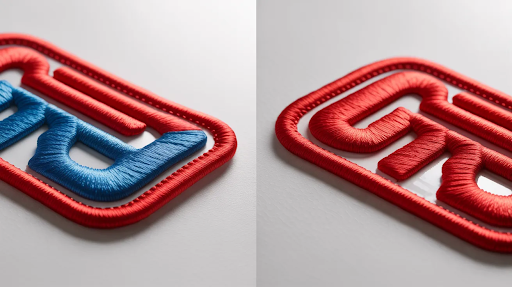
Your logo is ready. Your garments are stacked. The only thing standing between a forgettable finish and a proper brand flex is this one decision: heat transfer vs embroidery.
This debate pops up everywhere in the UK patch world. Workwear buyers arguing over durability. Fashion brands chasing detail. Event organisers needing speed. And small businesses asking the big question, sewn or heat‑pressed?
What’s surprising, there’s no universal winner. But there is a smart choice for your fabric, budget, and branding goal. Let’s break it down without the waffle, the jargon overload, or the salesy nonsense.
What Makes Heat Transfer Vs Embroidery A Popular Debate?
Both methods dominate the custom patch and apparel game for a reason.
Embroidery brings texture, heritage, and that premium stitched feel Brits trust on uniforms, hats, and jackets. Heat transfer delivers sharp graphics, colour accuracy, and speed, ideal for modern designs and fast campaigns.
The confusion starts when people assume one replaces the other. It doesn’t. Each solves a different branding problem.
If you’re choosing between embroidery vs heat transfer, you’re really choosing between longevity, detail, fabric behaviour, and cost efficiency.
Heat Transfer Explained Without the Hype
Heat transfer, also known as heat press branding, uses high heat and pressure to apply a design onto fabric. The artwork is printed or cut onto heat transfer vinyl or paper, then heat‑pressed onto garments.
Common heat transfer methods include
- Heat transfer vinyl
- Printed heat transfer paper
- Sublimation on compatible fabrics
- Embroidered heat transfers
These designs sit on the fabric rather than through it. That’s why heat‑pressed onto garments often look flatter, smoother, and more graphic. Heat press applications shine when detail matters more than texture.
Embroidery Explained Like an OG
Embroidery stitches your design directly into the fabric using specialised embroidery machines. Thread replaces ink. Texture replaces flatness.
Direct embroidery is known for
- Raised, tactile finish
- Strong durability
- Premium appearance
- Excellent wash resistance
This is why custom embroidered patches dominate uniforms, biker jackets, scout patches, and corporate workwear across the UK.
If you’ve ever wondered how logos become stitch‑ready, the process starts with digitisation. That’s where design files are converted into stitch paths, a crucial step explained in this guide on how to turn a picture into an embroidered patch.
Fabric Durability: Which One Actually Lasts?
This is where heat transfer vs embroidery comparisons get spicy.
Embroidery durability
- Thread is stitched into fabric
- Resistant to repeated washing
- Handles friction better
- Ideal for heavy‑duty garments
Heat transfer durability
- Sits on fabric surface
- Can crack or peel over time
- Sensitive to wash temperature
- Depends heavily on material quality
On cotton, denim, canvas, and fleece, embroidery wins. On lightweight synthetics, stretch fabrics, and performance wear, heat transfer often behaves better.
If durability is your top priority, embroidery takes the crown. No debate.
Which Branding Method Works Best For Different Fabrics?
Let’s keep this practical.
Best fabrics for embroidery
- Cotton
- Canvas
- Denim
- Wool blends
- Heavy fleece
Best fabrics for heat transfer
- Polyester
- Lycra blends
- Lightweight cotton
- Performance fabrics
- Stretch apparel
Embroidery machines can distort thin or stretchy materials. Heat press designs adapt better here because they don’t pull the fabric.
This is why many brands now combine techniques depending on garment type.
Costing Breakdown: What Hits Your Budget Harder?
Cost is where opinions flip fast.
Embroidery costs depend on
- Stitch count
- Thread colours
- Digitising fees
- Machine time
Complex logos mean higher stitch counts, which raise prices.
Heat transfer costs depend on
- Design size
- Colour complexity
- Transfer material
- Press time
Heat transfer is often cheaper for short runs, detailed artwork, and fast turnaround custom embroidered patches UK buyers need for events.
For bulk orders and uniforms, embroidery usually becomes more cost‑effective over time.
Branding Impact: Texture Vs Precision
Brand perception matters.
Embroidery sends signals of reliability, professionalism, and longevity. It’s why corporate logo patches UK made almost always use embroidery.
Heat transfer feels modern, bold, and graphic‑driven. Perfect for fashion drops, promotional patches for brand marketing, and creative campaigns.
Ask yourself, do you want people to feel your brand or see every tiny detail?
Embroidered Heat Transfers: The Hybrid Solution!
Yes, you can have both.
Embroidered heat transfers are stitched patches with heat‑activated backing. You get embroidered texture with easy application.
They’re ideal when:
- Sewing isn’t practical
- You need removable patches
- Speed matters
- Garments vary
Learning how designs are prepared for this hybrid method starts with proper digitisation, covered in this step‑by‑step embroidery digitising guide.
Technical Differences Between Heat Press And Embroidery Machines
Embroidery machines
- Use needles and thread
- Require digitised files
- Higher setup time
- Long production life
Heat press machines
- Use heat and pressure
- Faster setup
- Easier colour reproduction
- Lower equipment cost
Understanding these differences explains why turnaround times and pricing vary so much between methods.
What Are The Drawbacks Of Each Method?
Embroidery drawbacks
- Limited detail for small text
- Higher cost for complex designs
- Fabric stress on thin materials
Heat transfer drawbacks
- Lower long‑term durability
- Risk of peeling or cracking
- Heat sensitivity
No method is perfect. The trick is choosing the one that matches your intent.
Which Technique Is Best For Your Design?
Choose embroidery if your design:
- Needs texture
- Will face heavy wear
- Represents a long‑term brand
Choose heat transfer if your design:
- Has fine detail
- Uses gradients or photos
- Needs fast production
Still unsure? Many UK businesses mix both to get the best of each world.
FAQs
Which is more durable between heat press vs embroidery?
Embroidery is more durable and withstands washing and friction better.
Is heat transfer cheaper than embroidery?
Usually yes for short runs or complex designs, but embroidery becomes cost‑effective in bulk.
Can heat transfer patches be removed?
Yes, more easily than embroidered patches, depending on adhesive.
Are embroidered heat transfers reliable?
Yes, they combine stitched durability with heat‑press convenience.
Make The Smart Branding Choice
Heat transfer vs embroidery is all about fit. Your fabric. Your design. Your budget. Your timeline. We help brands choose the method that actually works, whether that’s high‑quality custom heat press solutions, premium embroidered patches, or hybrid options that give you flexibility.
If you’re ready to design your own patch and order without the guesswork, now’s the time to make your branding stick with Patch Makers UK. Let’s make your logo work harder than ever.