Your patch edge does more than tidy the perimeter. It decides how your branding feels, how long it lasts, and how clean it looks on camera. If you are comparing an overlocked border to a heat-cut edge for uniforms, merch or club gear, this guide gives you the practical, UK-focused truth. We will also flag where these types of patches fit in, since safety and visibility are now part of everyday branding.
First, What are We Comparing?
- Overlocked edge
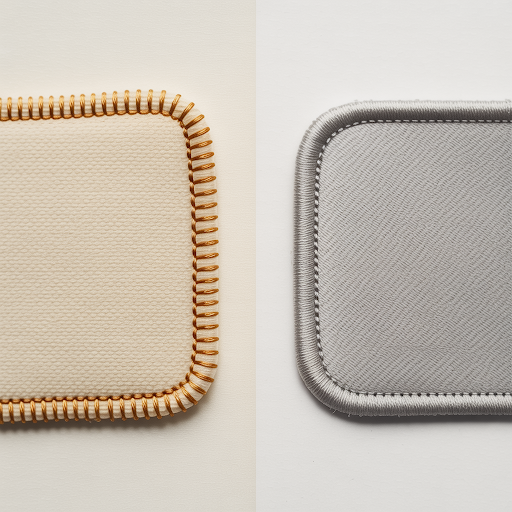
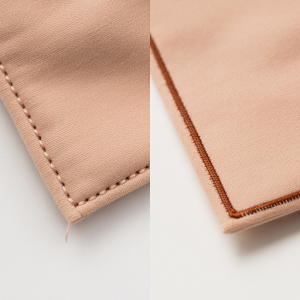
Also called a merrowed border. A row of tight overlock stitches wraps the outside of the patch and creates a rounded, rope-like rim. It is classic on circles, ovals, shields and rectangles. Think school crests, club member’s patch, custom biker patches for jackets, and heritage logos. - Heat-cut edge
Also called hot-knife or laser-cut. The patch shape is cut from the fabric with heat so the edge seals and stays flat. No visible rim. It is perfect for intricate outlines, mascots, script logos and modern shapes. It also behaves brilliantly on custom logo patches for hats, curved caps and technical jackets.
Both finish types work across Custom Embroidered Patches, Custom Woven Patches, Custom PVC Patches with laser-cut backers, and even Custom Sublimated Patches. The choice is about silhouette, comfort and durability in your setting.
When an Overlocked Edge Wins
- Comfort on knitwear and skin
That rounded rim is kind to jumpers and hoodies, and it reduces snag points on bags. - Classic shapes and bold looks
Circles, ovals and shields look finished and premium with a merrow. It frames the art and hides the fabric edge. - Everyday abuse
The stitched rim resists fray when kids swing backpacks by the strap or when mechanics lean across the bonnet. For heavy use on cotton or denim, overlocked is a safe pick for sew on patches for clothes and custom embroidered patches for hoodies. - Speedy application
Iron-on plus a quick top stitch through the border gives serious staying power. Ideal for schools, clubs and bulk custom patches for uniforms.
If you are deciding between a stitched rim and a satin-stitched inner border on the artwork, this explainer helps you compare like for like: Difference Between Merrowed Border And Embroidered Border.
When a Heat-cut Edge is the Better Tool
- Complex shapes
Lightning bolts, antlers, script tails, mascot whiskers. Heat-cut keeps the outline light and crisp where an overlock would look bulky. - Lightweight garments
On tech shells, performance polos and nylon windbreakers, a flat sealed edge sits closer to the fabric. That matters for custom patches for hoodies with soft fleece and for caps where you want less bulk. - Hidden edges for a retail look
If you want the patch to read as part of the garment, heat-cut avoids the raised rim. Your logo feels integrated rather than added on.
Backings that Match the Edge
- Iron on
Fast and tidy for both finishes. On overlocked borders, the adhesive sits inside the rim which helps with alignment. On heat-cut patches, ensure the adhesive reaches the edge so corners do not lift. This is the sweet spot for most custom iron on patches in schools and retail. - Sew on
The durability king for workwear and denim. Overlocked edges give you a strong stitch path. Heat-cut patches sew equally well but use a slightly wider needle on thick twill so you do not nick the sealed edge. - Velcro hook and loop
Brilliant for role changes, events and modular uniforms. Heat-cut patches pair neatly with Velcro for a slimmer profile that sits flat on caps and tactical vests. It is a tidy choice for custom military patches UK, event staff and custom scout patches bulk. - Magnetic inserts
Pin-free solutions for blazers and stage wear. Works with either finish when you need fabric-safe fixing.
What Edge Looks Best on Each Material
- Embroidery on twill
Overlocked looks heritage and bold on round or shield logos. Heat-cut looks modern on logos with detailed outlines. - Woven
Woven patches are thin and crisp. Heat-cut keeps them feather-light. Overlocked adds a tidy frame for school and civic crests. - Sublimated
Photo-style art loves heat-cut to avoid a heavy rim.
PVC
PVC does not fray but the fabric layer under it does. We laser the backer for a clean outline, then sew or Velcro to garment. Great for mud, rain and festival conditions where custom patches for festivals and custom patches for events need quick wash downs.
How Edge Choice Affects Price and Lead Time
Overlocked borders take time to stitch and are most efficient on regular shapes. Heat-cut has setup time but scales well across varied outlines. On small to mid volumes the price difference is usually minor.
What moves the quote is size, stitch density, fabric type and how many colour changes your logo needs. If you are chasing Custom Patches at Low Prices or a cheap custom patches with no minimum test run, heat-cut on a standard twill can be the fastest to sample.
For urgent campaigns, ask about fast turnaround custom patches UK and specify whether you are happy with heat-cut for launch, with an overlocked reprint later for long-term stock. Smart staging gets you on time without visual compromise.
Real World Pairing Ideas
- Caps and beanies
Heat-cut embroidered or woven patches, iron-on then a perimeter stitch. Keeps weight down on custom logo patches for hats. - Denim and canvas jackets
Overlocked embroidered patches, sew-on. Perfect for custom for bomber jacket looks and club member’s patch layouts. - Outdoor and high-vis
Heat-cut reflective patches with Velcro. Swap roles at the gate. Clean with a wipe. - School and corporate uniforms
Overlocked for crests on blazers, heat-cut for modern sub-brands on polos. Mix with name bars and role tabs for staff ID and corporate logo patches UK made. - Merch drops
Heat-cut for unique outlines and Unique Patches. Pair with backer cards for retail. Great on custom logo patches for bags.
Sizes, Borders and Backings, The Smart Way
Here is the tidy decision stack we use with uniforms, merch and workwear in the UK. Start with the garment, then pick size, then pick the edge, then pick the backing.
- Blazers, denim, canvas. Go 70 to 90 mm, overlocked, sew on. It looks classic and takes a beating.
- Caps, tech shells, nylon. Go 55 to 70 mm, heat cut, low-temp iron on plus a neat perimeter stitch. Lightweight, sits flat.
- Hoodies and fleece. Overlocked for comfort at the rim, then either iron on or sew on.
- Bags and kit. Heat cut for fun outlines, or overlocked for a framed crest. Use sew on for strength.
If you want one master reference that covers sizes, colours, borders and backings in one sitting, save our UK#1 Guide to Custom Patch Sizes, Types, Colours, Borders & Backings. It will keep your spec sheets consistent across suppliers.
What Does Each Choice Do to Price?
People ask how much do custom patches cost before they ask anything else. The edge is rarely the big swing. Size, stitch coverage, fabric type and quantity are the drivers.
- Heat-cut is efficient for unusual shapes and small test runs.
- Overlocked is efficient on round, oval and shield shapes in larger batches.
- Reflective fabrics and PVC cost a touch more, but they save money in the field because they last.
If you need a pilot, we can run cheap custom patches with no minimum on selected styles, then scale. For tight deadlines, ask about fast turnaround custom patches UK so your launch date stays put.
FAQs
Which edge is stronger, overlocked or heat-cut?
Both are tough when applied correctly. Overlocked gives you a chunky rim that hides wear on canvas and denim. Heat-cut seals the fibres so there is no fray and it keeps weight down on nylon and caps.
Do overlocked patches fray over time?
Not when stitched and trimmed properly. The overlock thread forms a protective cord. If you see fluff, it is usually from poor trimming or bargain materials. Pick high quality embroidered patches made in UK and you avoid that.
Are reflective patches better with heat-cut edges?
Often yes. A flat sealed edge protects the reflective field and avoids extra stitches that can dull brightness. For roadside crews or bike clubs, heat-cut reflective with Velcro is a brilliant combo.
Can I iron on both edge types?
Yes. Use the right temperature, pressure and dwell time for the fabric. Heat-cut needs adhesive right up to the edge so corners do not lift. Overlocked loves a top stitch for uniforms that hit 60 in the wash.
What if I want tiny text on a small shield?
Choose woven with a heat-cut edge. Woven is clearer at small sizes, and heat-cut keeps the silhouette crisp. This is a winner for school mottos and civic crests.
Why order from Patch Makers UK
You want a supplier that understands uniforms, merch and deadline pressure. We produce custom patches made in United Kingdom quality with clear proofs, practical advice and tidy pricing. Whether you need personalised clothing patches, custom logo patches for jackets, caps or bags, or a full suite across enamel, woven, embroidered, PVC and reflective, we make it simple.
That is why clients call us the Best Patch Maker and the best place to order custom patches. If you like to compare, we are happy to quote side by side as your UK#1 Custom Patch Manufacturer.
Prefer self-serve. You can design your own patch and order, pick overlocked or heat-cut, select iron on, sew on or Velcro, then checkout. Prefer help. Tell us the garment, size and deadline. Patch Makers UK will spec both edges, show you how the outline changes, and guide you to the finish that suits your use case